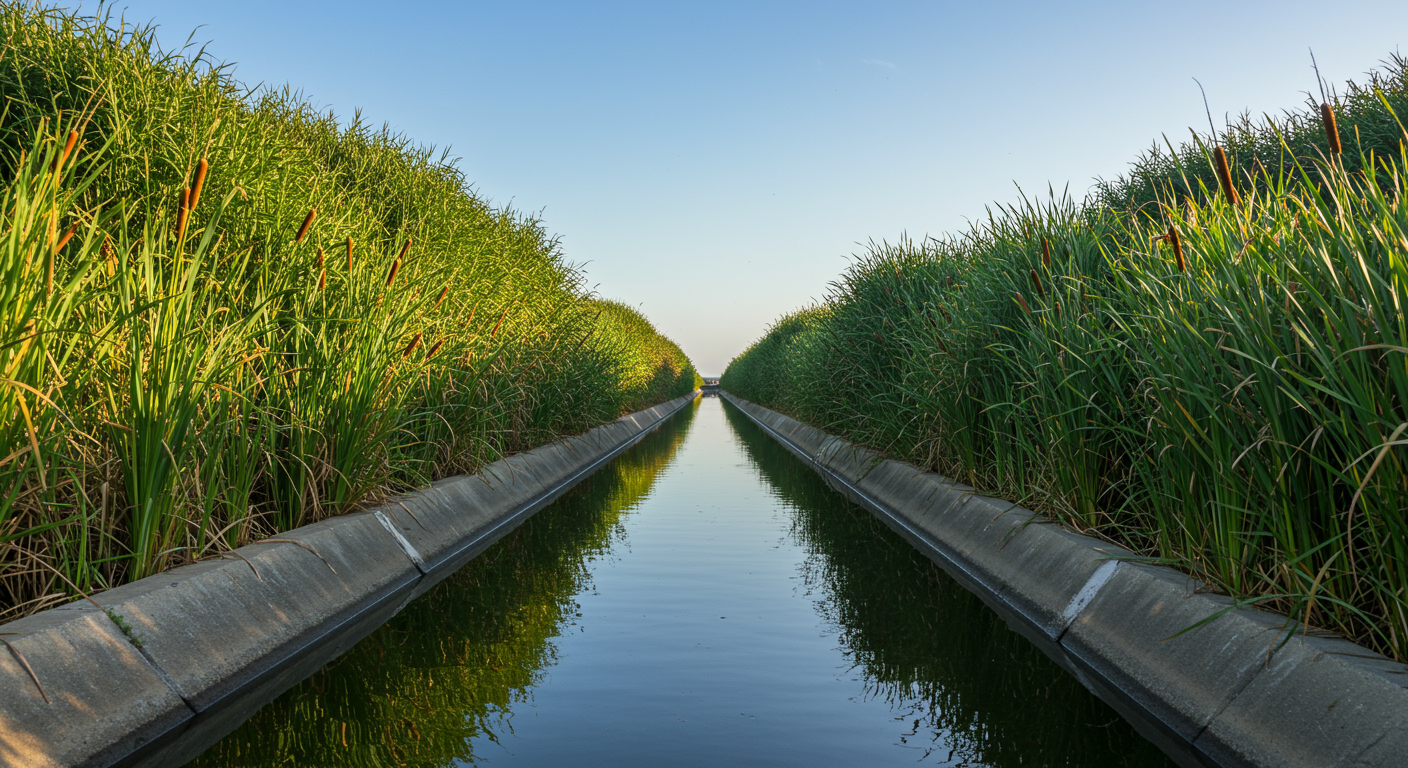
Cattail Removal in Long Beach
Specialized mechanical extraction for harbor-adjacent properties, coastal HOA communities, and city parks.
Professional Waterway Restoration in Long Beach
Property owners and managers in Long Beach face unique challenges when it comes to aquatic vegetation. Specifically, overgrown cattails severely impact harbor-adjacent properties, coastal HOA communities, and city parks. What might start as a few decorative plants along the shoreline can quickly multiply through aggressive underground rhizomes, choking out the water body entirely.
At CattailRemoval.com, we provide specialized mechanical removal services for properties in Long Beach and the surrounding region. We don't just trim the visible leaves; we utilize heavy-duty equipment to extract the root mass, ensuring long-lasting clarity and restored water flow.
Why Cattails Are a Problem Here
- Blocks critical stormwater drainage
- Creates stagnant mosquito breeding pools
- Significantly lowers adjacent property values
- Causes severe fire hazards during dry months
Our Services in Long Beach
We are equipped to handle large-scale commercial and residential projects. Our core services available in the area include:
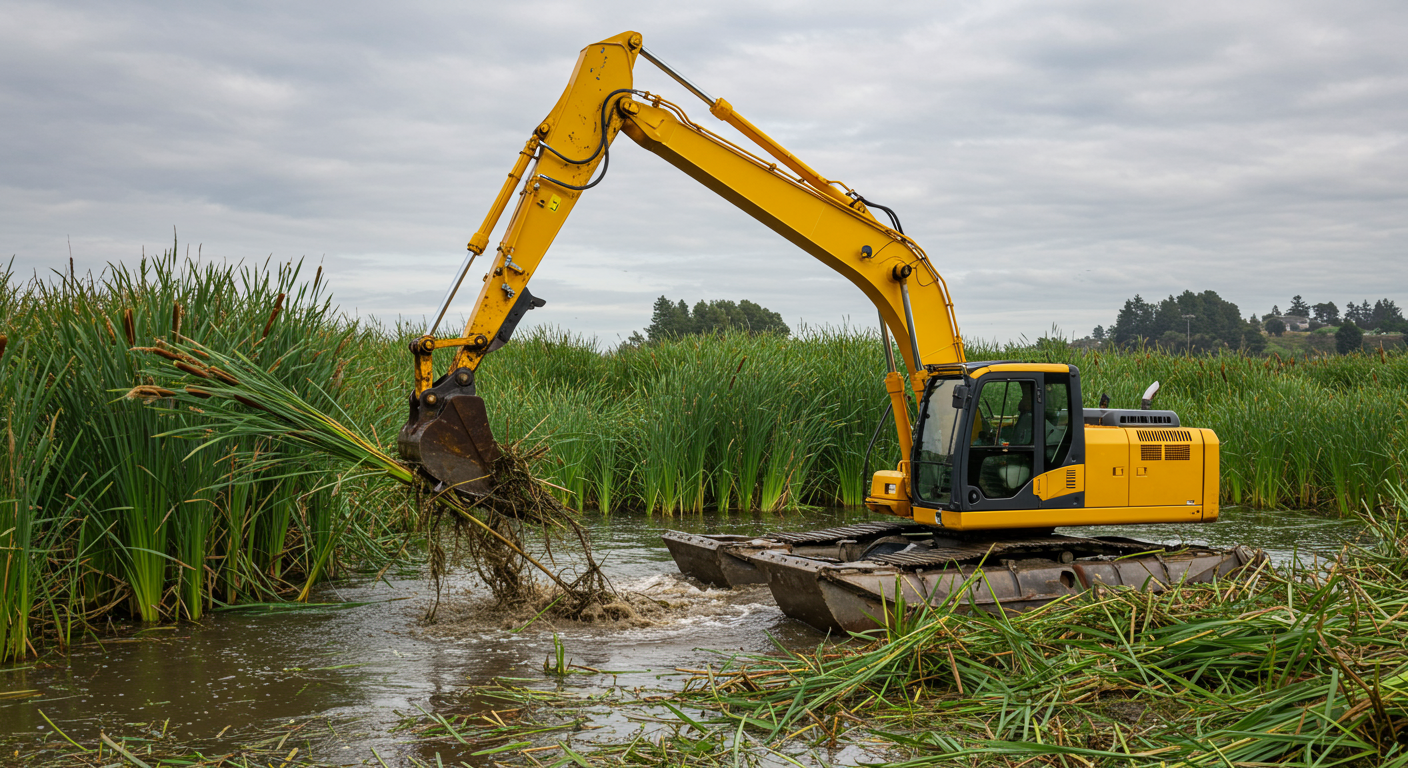
Our crew deploying mechanical extraction equipment for a cattail removal project similar to those served in Long Beach.
Free Site Inspection — No Obligation
Request a Cattail Removal Inspection in Long Beach
Our field specialists evaluate your water body, assess overgrowth density, and provide a detailed written proposal — at no cost.
Licensed & insured. Serving Long Beach and surrounding areas.
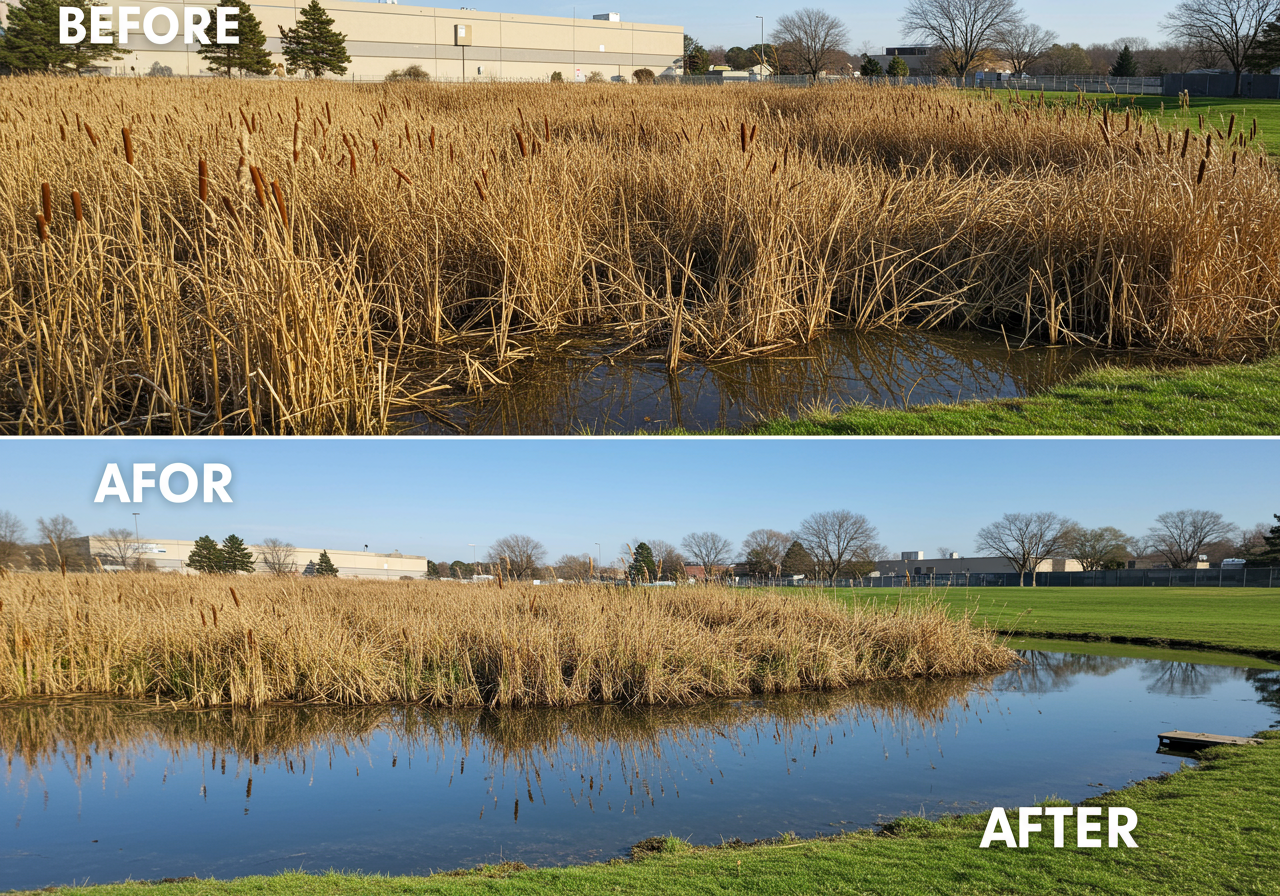
Before & After: Cattail Removal Results
The difference a professional removal makes is dramatic. Dense, impenetrable cattail stands are cleared to restore full water access and drainage function.
How We Work: Equipment & Removal Process in Long Beach
Every cattail removal project begins with a free on-site evaluation. Our field specialist assesses the density and extent of overgrowth, the water body type and bottom conditions, equipment access routes, and any regulatory considerations that apply. This evaluation produces a detailed written proposal with fixed pricing — no surprises.
For Long Beach properties with Bay-adjacent channels, tidal margins, or Delta waterway access, we deploy amphibious excavators capable of operating in soft-bottom and water-covered conditions. These machines can work from the water surface while simultaneously extracting root mass from below — the only effective approach for sites where conventional dry-land equipment cannot reach overgrown margins.
Project timelines vary by scope: small residential or HOA ponds typically complete in 1–2 days, medium retention basins in 2–4 days, and larger lake or channel projects in 5–10 days with equipment staging. We provide daily progress updates and a final documentation package for HOA boards, property management companies, or municipal agencies that require project records.
Long-Term Cattail Control Strategy
Mechanical extraction produces excellent long-term results compared to cutting — but complete, permanent elimination is rarely achievable in a single project. Cattail rhizomes can extend 3–6 feet deep and several feet laterally, and even thorough extraction may leave viable fragments that can regenerate over time. The regrowth timeline depends heavily on nutrient load in the water body, the original density of the stand, and seasonal conditions.
For Long Beach property managers, we typically recommend a monitoring visit 12–18 months after initial extraction to assess regrowth and plan any follow-up work. Many of our clients in the region transition to annual or biannual light maintenance — addressing early regrowth before it re-establishes — rather than larger periodic removal projects. This approach is more cost-effective over time and keeps water bodies consistently functional. Ask about our long-term vegetation control plans when you schedule your inspection.
Helpful Resources for Long Beach Property Owners
Before requesting a quote, many property managers find it useful to review our resource guides. Our cattail removal cost guide provides realistic price ranges based on pond size, density, and equipment access. For properties with heavy mechanical equipment needs, see our detailed overview of mechanical cattail removal methods. If you manage a stormwater basin or HOA retention pond, our retention basin removal service page explains the process in full. Private pond owners can review our pond removal cost estimator and the pond-specific removal services page for an overview of what to expect. For properties on natural waterways or wetlands, see our California wetland permit guide and shoreline alteration permit considerations.
Nearby Areas We Serve
In addition to Long Beach, we provide cattail removal services to surrounding communities throughout the region. If your property is in one of these nearby cities, we're ready to help:
- Cattail Removal in Los Angeles, CA
- Cattail Removal in Anaheim, CA
- Cattail Removal in Huntington Beach, CA
- Cattail Removal in Orange, CA
- Cattail Removal in Santa Ana, CA
View our full California service area list to see all cities we serve.